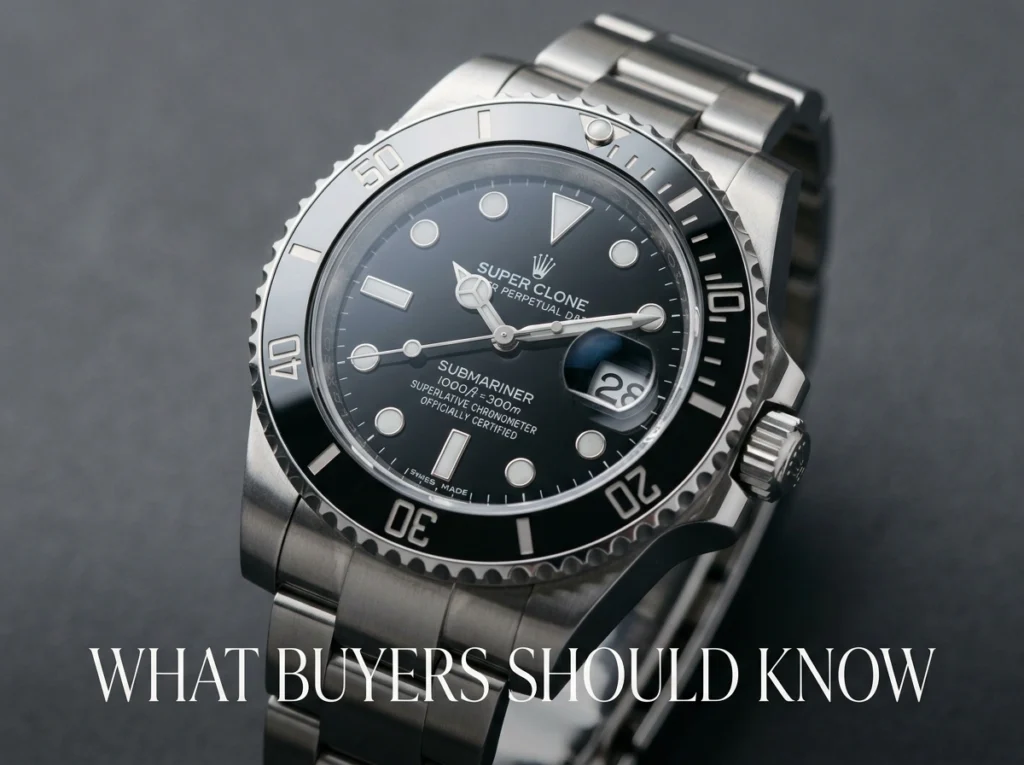
The market for high-end replica watches has grown rapidly over the past decade. Among the most searched terms in this space is the “super clone” Rolex—a category of replica that claims to mimic genuine timepieces with remarkable precision. If you’re researching a purchase, it pays to understand exactly what you’re getting into before money changes hands.
This guide walks you through the practical, financial, legal, and ethical factors worth weighing. The goal isn’t to push you toward or away from a decision. It’s to help you make an informed one.
What “Super Clone” Actually Means
The term “super clone” gets thrown around loosely. In general, it refers to replicas built to far higher standards than ordinary fakes. Sellers often advertise tighter tolerances, better materials, and movements designed to closely resemble the originals.
Keep in mind that there’s no official standard for the word. One vendor’s “super clone” might be another’s mid-tier product. Because the label is unregulated, it tells you very little on its own. You’ll need to dig into the specifics rather than trust the marketing language.
Quality Claims: Read Between the Lines
Almost every listing promises top-tier quality. Bold claims like “1:1 accuracy” or “indistinguishable from genuine” are common. Treat these statements with healthy skepticism.
Here’s what to look for instead:
- Detailed photos and videos of the actual product, not stock images
- Close-up shots of the dial, bezel, crown, and case back
- Honest comparisons that acknowledge limitations rather than claiming perfection
- Customer-submitted images, which tend to be more reliable than seller photos
A trustworthy seller will describe what their product does well and where it falls short. If everything sounds flawless, that’s often a warning sign rather than reassurance.
Materials Matter More Than You Think
Material quality separates a convincing replica from an obvious one. Genuine luxury watches use 904L stainless steel, sapphire crystals, and specific gold alloys. Many replicas cut corners here.
Before buying, ask direct questions:
- Is the case made from 316L or 904L steel?
- Is the crystal genuine sapphire or cheaper mineral glass?
- What is the bracelet’s weight and finish?
Sapphire crystal resists scratches far better than mineral glass. Heavier, properly finished steel feels closer to the real thing. Cheap materials often reveal themselves quickly through discoloration, light weight, or visible scratches.
Movement Considerations
The movement—the mechanism that powers the watch—is where many replicas struggle. Genuine timepieces use carefully engineered in-house movements. Replicas typically rely on modified Japanese or Chinese movements, sometimes dressed up to look like the original.
When evaluating a listing, consider:
- Movement type: Automatic, manual, or quartz
- Origin: Some buyers prefer specific manufacturers known for reliability
- Accuracy claims: Be realistic; few replicas match genuine chronometer standards
- Power reserve: How long the watch runs on a full wind
A smooth-sweeping second hand is often advertised as a sign of quality, but movement reliability over months and years matters far more than a single visual detail.
Seller Transparency and Reputation
The seller is just as important as the product. Reputable vendors are open about their offerings, communicate clearly, and have a track record you can verify.
Look for:
- Established customer reviews across independent forums
- Clear communication before purchase
- Transparent return and refund policies
- Honest answers to technical questions
Some buyers research vendors that advertise a super clone rolex for sale to compare how different sellers present their products, policies, and pricing. Comparing several sources helps you spot which ones provide real detail versus empty promises.
Pricing Expectations
Price is one of the clearest signals in this market. A genuine Rolex costs thousands, sometimes tens of thousands. A replica priced at a small fraction of that should set expectations accordingly.
That said, extremely cheap “super clones” are usually low-quality fakes wearing a fancy label. Higher-end replicas cost more because better materials and movements cost more to produce.
Be cautious of:
- Prices that seem too good to be true
- Pressure to buy quickly during “limited” sales
- Vague answers about why one product costs more than another
Reasonable pricing reflects the materials and craftsmanship involved. Use price as a sanity check, not a guarantee of quality.
The Risks You’re Taking On
Buying replicas carries real risks that go beyond product quality. Understanding them upfront protects you from disappointment.
Financial risk: Payment fraud is common in unregulated markets. You may pay and receive nothing, or receive something far below what was promised.
Shipping and customs risk: Replica goods can be seized at borders. You could lose both the product and your money with no recourse.
Quality risk: Even well-reviewed sellers ship inconsistent products. The unit you receive may differ from the photos.
Authenticity Issues
It’s worth stating plainly: a replica is not genuine, no matter how good it looks. Some sellers blur this line, hinting that their products are “authentic grade” or could “pass as real.”
Never buy a replica believing it might be the real thing. And never resell one as genuine—doing so can expose you to fraud claims. Honest framing protects both you and anyone you might deal with later.
Legal and Ethical Considerations
Replica watches sit in a legally gray—and often outright illegal—area. Many countries treat the sale of counterfeit goods as trademark infringement. Buyers can face confiscation, and sellers can face serious penalties.
There are ethical questions too. Counterfeiting affects brand owners, and some operations have been linked to broader illicit activity. These are factors worth weighing honestly against your own reasons for buying. Knowing the legal landscape in your country before purchasing is simply smart.
After-Sales Support
Few buyers think about support until something breaks. Genuine watches come with warranties and authorized service centers. Replicas almost never do.
Before purchasing, find out:
- Whether the seller offers any warranty
- How repairs or part replacements are handled
- Whether replacement parts are available at all
- What happens if the watch stops working soon after arrival
A seller who offers some form of support and clear policies is generally more reliable than one who disappears after the sale.
Red Flags to Watch For
Keep an eye out for these warning signs throughout your research:
- No verifiable reviews or only glowing testimonials on the seller’s own site
- Stock photos instead of real product images
- Unusual payment methods with no buyer protection
- High-pressure sales tactics and countdown timers
- Refusal to answer specific questions about materials or movements
- Prices wildly inconsistent with quality claims
- Poor communication or slow, evasive responses
Any single red flag warrants caution. Several together should stop you from proceeding.
Final Thoughts
Researching a super clone Rolex purchase comes down to managing expectations and reducing risk. Scrutinize quality claims, verify materials and movements, evaluate the seller carefully, and understand the legal and ethical stakes involved.
No replica is a perfect substitute for the genuine article, and the market carries risks that won’t disappear no matter how careful you are. The more homework you do before buying, the better positioned you’ll be to make a decision you won’t regret. Take your time, compare your options, and let the details—not the marketing—guide your choice.
