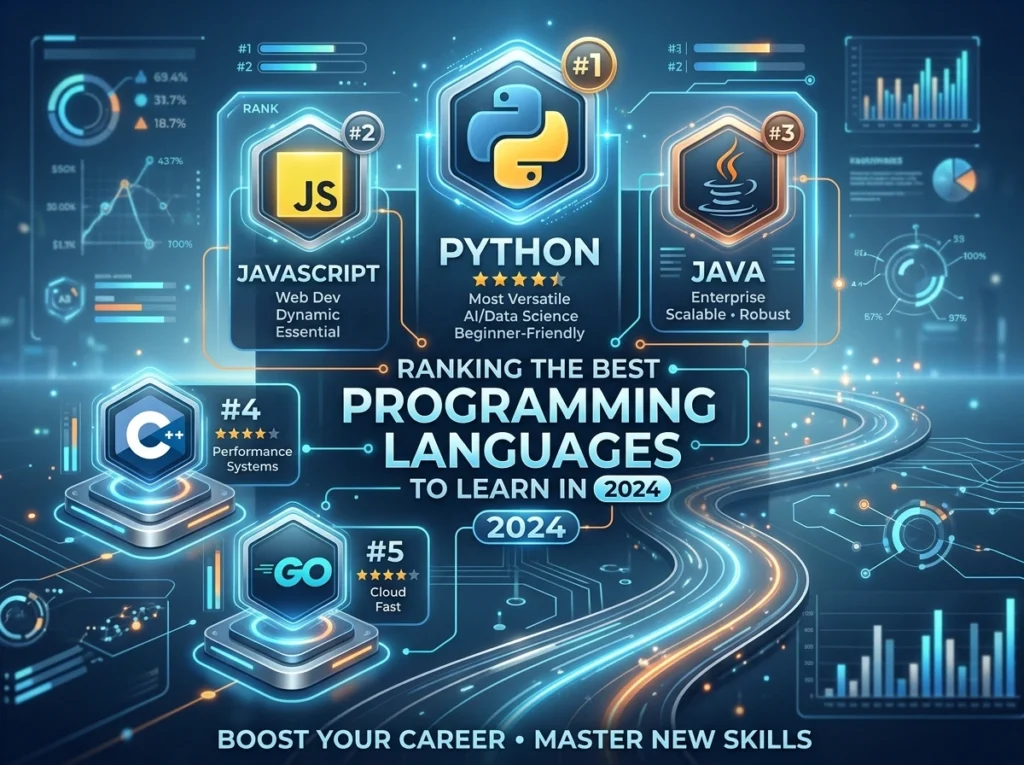
Choosing a programming language feels like a small decision until you realize how much it shapes your career. The right choice can open doors to high-paying jobs, exciting projects, and a thriving community. The wrong one can leave you stuck learning skills that few employers value. With hundreds of languages out there, how do you pick?
That’s where a trusted ranking helps. Every year, tech hence reviews the programming landscape and ranks the languages worth your time. Their approach isn’t based on hype or personal favorites. Instead, it relies on hard data, real-world demand, and the practical needs of learners across the United States. Let’s break down how they do it and which languages made the list this year.
Why the Right Language Matters More Than Ever
Technology touches nearly every industry now, from healthcare and finance to entertainment and manufacturing. Companies across the country need skilled developers, and the demand keeps growing. But different roles call for different tools. A data scientist in California relies on very different languages than a web developer in New York or an embedded systems engineer in Texas.
Picking a language that matches both your goals and market demand saves you time and boosts your earning potential. That’s why a thoughtful, data-driven ranking matters so much. It cuts through the noise and points you toward skills that pay off.
The Ranking Methodology
A good ranking needs a clear method. Tech Hence uses five core criteria to measure each language. Here’s how each one works.
Job Market Demand
The first and biggest factor is demand. Tech Hence tracks job postings across major hiring platforms and regional markets throughout the U.S. They look at how often each language appears in listings, which industries request it, and whether demand is rising or falling. A language with strong, steady demand ranks higher because it leads to real employment.
Community Support
No one learns alone. A strong community means better documentation, active forums, helpful tutorials, and quick answers when you get stuck. Tech Hence measures community strength by looking at open-source activity, question volume on developer sites, and the number of active libraries and frameworks. Languages with vibrant communities help beginners progress faster.
Versatility
Some languages do one thing well. Others handle web apps, mobile development, data analysis, and automation all at once. Versatile languages give you more career options and let you pivot as your interests change. Tech Hence rewards languages that adapt to many use cases.
Ease of Learning
A language that takes years to master isn’t ideal for newcomers. Tech Hence considers how quickly a motivated beginner can write useful programs. Clear syntax, readable code, and gentle learning curves all score well here. This factor matters most for people just starting out.
Salary Potential
Money talks. Tech Hence analyzes salary data across regions to see which languages tie to the highest pay. Because economic conditions vary from state to state, they weigh both national averages and regional differences. A language that commands strong salaries earns extra points.
The Top-Ranked Languages This Year
After weighing all five criteria, here are the languages that rose to the top.
Python
Python continues to lead the pack, and for good reason. Its clean, readable syntax makes it one of the easiest languages to learn. Yet it powers some of the most advanced work in the field, from artificial intelligence and machine learning to data science and automation.
Demand for Python skills remains sky-high across nearly every industry. The community is massive, the libraries are endless, and salaries are strong. If you’re unsure where to begin, Python is a safe and smart bet.
JavaScript
JavaScript runs the web. If you’ve clicked a button, watched a video, or filled out a form online, you’ve used it. Every browser understands JavaScript, which makes it essential for front-end development. With tools like Node.js, it also handles back-end work.
Its versatility and enormous job market keep it near the top of the list. For anyone drawn to building websites and web apps, JavaScript is a must-learn skill.
TypeScript
TypeScript builds on JavaScript by adding type safety, which helps developers catch errors before they cause problems. Large companies love it because it makes big projects easier to manage and maintain.
Adoption has soared in recent years, and demand for TypeScript developers keeps climbing. If you already know JavaScript, learning TypeScript is a natural next step that boosts your value in the job market.
Rust
Rust has earned a loyal following thanks to its focus on speed and safety. It gives developers fine control over system resources without the memory bugs that plague older languages. That makes it ideal for performance-critical work like operating systems, game engines, and blockchain.
Rust has a steeper learning curve, so it’s not the easiest first pick. But developers who master it often command premium salaries, and its popularity keeps growing.
Go
Go, created by Google, was built for simplicity and scale. It handles cloud services, networking, and large distributed systems with ease. Companies that run massive online platforms rely on Go to keep everything fast and stable.
Its clean design makes it easier to learn than many system languages, and demand is strong in cloud-focused roles. For developers interested in backend and infrastructure work, Go is a great choice.
Java
Java has been a workhorse for decades, and it isn’t going anywhere. It powers enterprise software, Android apps, and countless business systems across the country. Banks, insurance firms, and large corporations depend on it every day.
The job market for Java remains deep and stable. While it’s not the trendiest option, its staying power makes it a reliable investment for a long-term career.
Honorable Mentions
A few other languages deserve a nod. SQL remains essential for anyone working with data. Swift dominates iOS app development. Kotlin is a modern favorite for Android. And C# stays strong in game development and enterprise apps. None of these should be overlooked depending on your path.
How to Choose the Right Language for You
A ranking points you in the right direction, but your personal goals should guide the final call. Here’s how to think it through.
Start With Your Goal
Ask yourself what you want to build. Interested in websites? Learn JavaScript and TypeScript. Drawn to data and AI? Python is your friend. Want to build iPhone apps? Swift is the answer. Your target shapes your choice more than any ranking.
Match Your Region and Industry
Job markets differ across the country. A quick search of local listings shows which languages employers near you want most. Aligning your skills with regional demand improves your odds of landing work fast.
Consider the Learning Curve
Be honest about your starting point. Beginners often do best with Python or JavaScript because they’re forgiving and rewarding early on. You can always add harder languages like Rust later, once you have a solid foundation.
Think Long Term
Trends shift, so pick a language with lasting value. The languages on this list all have strong communities and steady demand, which means the time you invest will keep paying off for years.
Final Thoughts
Learning to code is one of the smartest moves you can make in a tech-driven economy. But you don’t have to learn everything at once. Focus on a language that fits your goals, matches market demand, and keeps you motivated.
Rankings like the one from Tech Hence give you a clear, data-backed starting point. Use them as a guide, pair them with your own interests, and commit to steady practice. Whether you choose Python, JavaScript, Rust, or another top pick, the important thing is to start. Your future self will thank you.
