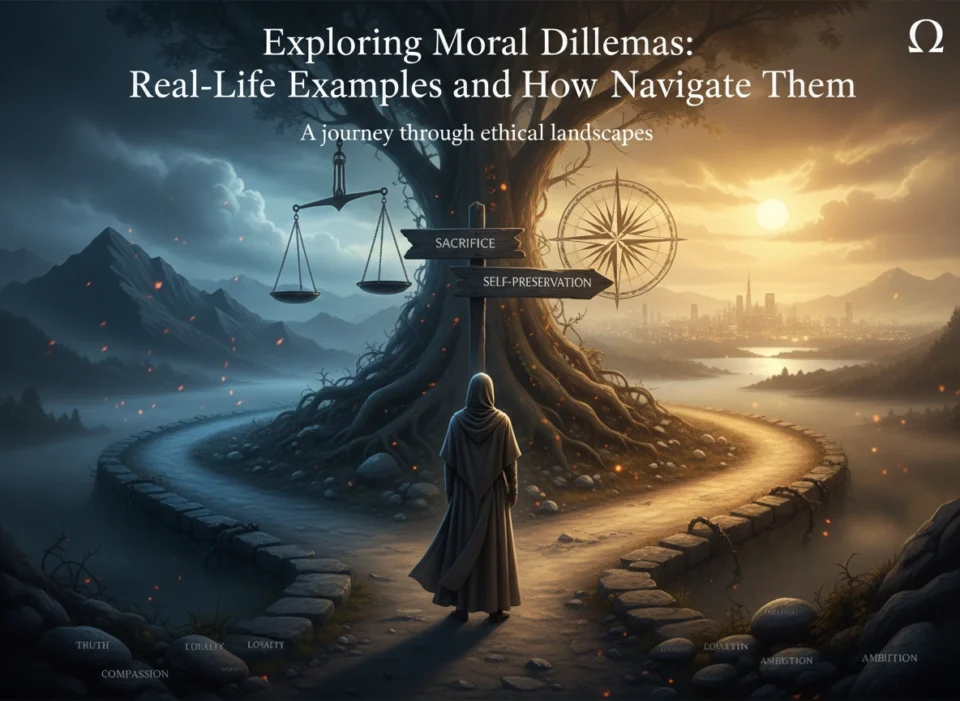
Life rarely presents us with clear-cut choices between good and evil. More often, we find ourselves at a crossroads, facing situations where our core values conflict. These are moral dilemmas, complex predicaments where any choice we make will compromise a deeply held belief. They are not simple problems with easy answers but are instead the challenging moments that define our character, shape our relationships, and build the foundation of our societies. Understanding these dilemmas is the first step toward navigating them with integrity and wisdom.
A moral dilemma arises when a person must choose between two or more conflicting moral obligations, and neither choice feels entirely right. In these situations, every available option has significant ethical drawbacks. This internal conflict is a fundamental part of the human experience, forcing us to weigh competing duties, rights, and principles. Whether in the sterile environment of a hospital, the fast-paced world of business, or the quiet intimacy of our personal lives, these dilemmas test our ethical compass and compel us to decide what truly matters.
Real-Life Arenas of Moral Conflict
Moral dilemmas are not abstract philosophical puzzles; they are woven into the fabric of our daily lives. They appear in various contexts, each with its own unique pressures and stakes.
Ethical Challenges in Healthcare
The field of medicine is a constant source of profound moral dilemmas. Healthcare professionals are frequently caught between their duty to preserve life and their obligation to alleviate suffering. Consider the case of end-of-life care. A doctor may have a patient with a terminal illness who is in immense pain and has expressed a desire to end their suffering. The doctor’s professional oath and personal values might compel them to do everything possible to sustain life. However, they also have a duty of compassion, which includes respecting the patient’s autonomy and wish to die with dignity. Choosing to continue aggressive treatment could prolong agony, while honoring the patient’s request could be seen as a violation of the principle to “do no harm.” There is no easy answer, and any decision carries immense moral weight.
Another common dilemma in healthcare involves resource allocation. In a crisis, such as a pandemic or a mass-casualty event, hospitals may not have enough ventilators, beds, or staff for every patient in need. Who gets the life-saving treatment? Should it be the youngest person with the most years of life ahead? The one with the highest chance of a full recovery? A healthcare worker who can save others? Each criterion is based on a different ethical principle—utilitarianism, fairness, or social value—and making a choice means accepting that others may not receive the care they need to survive.
The Corporate Conundrum
In the world of business, the pursuit of profit can often clash with ethical responsibilities. A classic business dilemma involves a company that discovers a minor defect in a popular product. Issuing a full recall would be incredibly expensive, potentially leading to financial losses, layoffs, and a damaged reputation. However, ignoring the defect, even if the risk of harm to consumers is small, prioritizes financial gain over public safety. The leadership team must weigh its fiduciary duty to shareholders against its ethical duty to its customers. The decision they make will not only have immediate financial consequences but will also define the company’s culture and public image for years to come.
Similarly, consider a manager who learns that their company plans to automate a department, making several loyal, long-serving employees redundant. The manager is under a non-disclosure agreement but has strong personal relationships with the team members who will be affected. Should the manager honor their professional obligation to the company and remain silent, allowing their team to be blindsided? Or should they break confidentiality and give their colleagues an early warning, allowing them time to prepare but risking their own job and legal action? This is a direct conflict between professional loyalty and personal loyalty.
Dilemmas in Personal Relationships
Our personal lives are also fraught with moral complexity. Honesty is a cornerstone of any healthy relationship, but what happens when the truth could cause significant pain? Imagine you discover a difficult truth about a friend’s partner. Do you tell your friend, potentially shattering their happiness and destroying their relationship, all based on information they did not ask for? Or do you remain silent, protecting their current happiness but allowing them to live in ignorance and potentially betraying the trust your friend has in you? This dilemma pits the value of honesty against the value of compassion and non-maleficence (the duty to not cause harm).
Family dynamics often present their own unique challenges. An adult child might have to decide whether to place an aging parent with declining health in a residential care facility. The parent may have expressed a strong desire to stay in their own home, and the child feels a deep sense of duty to honor that wish. However, caring for the parent at home has become unsustainable, impacting the child’s own health, career, and family. The choice is between respecting the parent’s autonomy and ensuring their safety and well-being, while also considering the needs of one’s own immediate family. Both options involve a degree of sacrifice and potential guilt.
Navigating the Moral Maze: Frameworks for Decision-Making
While moral dilemmas don’t come with a simple instruction manual, several strategies and frameworks can help guide us toward more thoughtful and ethical decisions. These tools don’t provide the “right” answer, but they illuminate the path so we can choose with greater clarity and confidence.
1. The Ethical Decision-Making Model:
A structured approach can bring order to a chaotic emotional situation. A common model involves several steps:
- Identify the Ethical Issue: Clearly articulate the dilemma. What values are in conflict? Who are the stakeholders, and what are their interests?
- Gather the Facts: Collect all relevant information. Separate objective facts from assumptions, rumors, and emotional reactions.
- Evaluate Alternative Actions: Brainstorm all possible courses of action. For each option, consider it from different ethical perspectives. What would a utilitarian (greatest good for the greatest number) do? What would a deontologist (focused on duties and rules) do? What choice best reflects virtues like honesty, compassion, and justice?
- Make a Decision and Test It: Choose the alternative that seems most ethically sound. Test it by asking questions like: “How would I feel if my decision were made public on the news?” or “What would the most ethical person I know do in this situation?”
- Act and Reflect: Once you have acted, reflect on the outcome. What did you learn from the experience? What could you do differently next time?
2. Cultivate Empathy:
Empathy is the ability to understand and share the feelings of another. When facing a moral dilemma, it is crucial to step outside of your own perspective and consider the situation from the viewpoint of everyone involved. How does your decision affect the patient, the employee, the friend, the parent? Actively trying to feel what they might feel can provide critical insights that a purely logical analysis might miss. Empathy humanizes the dilemma, reminding us that our choices have real-world consequences for other people.
3. Engage in Critical Thinking:
Moral dilemmas are often clouded by emotion, bias, and external pressure. Critical thinking is the skill of analyzing information objectively and questioning our own assumptions. Challenge your initial gut reaction. Is it based on a deeply held value, or is it a product of fear, social conditioning, or self-interest? By dissecting the problem, examining the evidence, and evaluating arguments from all sides, you can move beyond a reactive choice to a more reasoned and defensible one.
The Enduring Importance of Ethical Reflection
Moral dilemmas are an unavoidable and essential part of life. They are the moments that force us to pause, reflect, and truly consider the kind of person we want to be. While navigating them is never easy, engaging with them honestly and thoughtfully is a profound act of personal growth. By using structured frameworks, practicing empathy, and employing critical thinking, we can approach these challenges not as paralyzing crises, but as opportunities to affirm our values and act with greater integrity.
In an increasingly complex world, the ability to navigate moral gray areas is more important than ever. The choices we make in these moments ripple outward, affecting our families, our workplaces, and our communities. By embracing the challenge of ethical decision-making, we contribute to a more just, compassionate, and thoughtful society, one difficult choice at a time.Please click here for more info.
You may also read: How to Manage TikTok Followers Without Blocking: A Step-by-Step Guide
