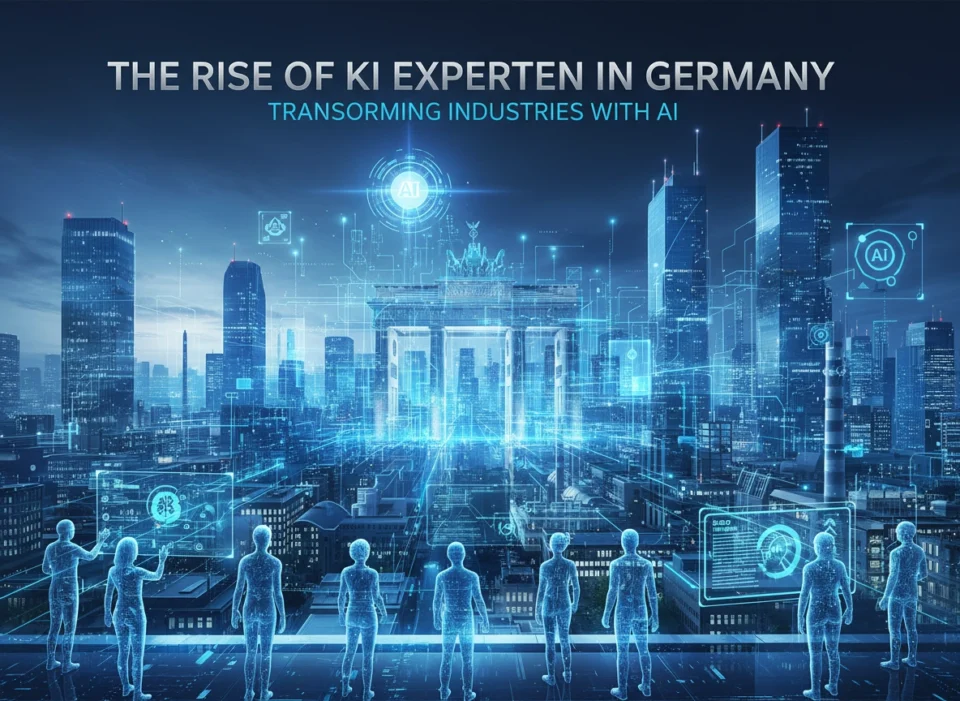
Germany’s reputation for engineering excellence and industrial prowess is globally recognized. Now, a new force is reshaping its economic landscape: Artificial Intelligence. At the heart of this transformation are KI Experten, or AI experts, who are applying intelligent technologies to drive innovation and efficiency across key sectors. This shift is not just an incremental change; it is a fundamental evolution, positioning Germany to lead in the next wave of industrial and technological advancement. The demand for skilled AI professionals has surged as businesses from the Mittelstand to large corporations recognize that AI is no longer a futuristic concept but a present-day competitive necessity.
This article explores the growing influence of KI Experten Deutschland. We will examine how these specialists are revolutionizing core industries, discuss the unique opportunities and challenges present in the German market, and look ahead at what the future holds for AI-driven transformation. From the factory floor to the hospital ward, AI experts are scripting Germany’s next chapter of innovation.
The Foundation of Germany’s AI Ecosystem
Germany’s journey into AI is built on a solid foundation of academic research, government support, and industrial application. The federal government’s “AI Strategy,” launched in 2018 and subsequently updated, aims to establish Germany and Europe as leading hubs for AI development and application. This strategy includes significant investment in research, talent development, and the creation of a robust infrastructure.
Universities and research institutions like the German Research Center for Artificial Intelligence (DFKI), the Max Planck Institute for Intelligent Systems, and the Fraunhofer Society are at the forefront of AI research. These centers act as crucibles for innovation, producing not only groundbreaking studies but also the next generation of KI Experten. They foster a collaborative environment where academic theory meets practical, industry-focused challenges.
Furthermore, Germany’s strong industrial base provides a unique testing ground for AI. The concept of “Industrie 4.0,” which originated in Germany, integrates automation and data exchange in manufacturing technologies. AI is the natural evolution of this concept, adding a layer of intelligence that enables predictive maintenance, autonomous systems, and highly optimized supply chains. This existing framework gives German KI Experten a distinct advantage, allowing them to apply AI in complex, real-world industrial settings.
Transforming Key German Industries
The impact of KI Experten is most visible in Germany’s powerhouse sectors. These specialists are not just implementing off-the-shelf solutions; they are developing bespoke AI systems tailored to the specific needs of their industries, unlocking unprecedented value and efficiency.
Automotive: The Road to Autonomous Driving
The German automotive industry, home to giants like Volkswagen, BMW, and Mercedes-Benz, is undergoing a profound transformation driven by AI. KI Experten are central to developing the complex systems required for autonomous driving. This involves creating algorithms for sensor fusion, perception, and decision-making, allowing vehicles to interpret their environment and navigate safely.
Beyond self-driving cars, AI is optimizing the entire automotive value chain.
- Smart Manufacturing: AI-powered robots and computer vision systems are enhancing quality control on assembly lines, identifying defects with a precision that surpasses human capabilities.
- Predictive Maintenance: By analyzing data from sensors embedded in vehicles, AI algorithms can predict when a component is likely to fail, enabling proactive maintenance that improves safety and reduces costs.
- Customer Experience: AI-driven virtual assistants and personalized infotainment systems are becoming standard features, enhancing the in-car experience for drivers and passengers.
Manufacturing: The Intelligent Factory
Manufacturing remains the backbone of the German economy. KI Experten are at the forefront of building the “smart factory” of the future. They leverage AI and the Internet of Things (IoT) to create highly efficient, flexible, and autonomous production environments.
In these intelligent factories, machine learning algorithms analyze vast amounts of production data to optimize processes in real-time. For example, an AI system can adjust machine settings automatically to reduce energy consumption or minimize material waste. Predictive analytics helps anticipate equipment failures, scheduling maintenance before a breakdown occurs and preventing costly downtime. Generative design, another AI-powered tool, allows engineers to create optimized designs for parts that are lighter, stronger, and more efficient to produce.
Healthcare: A New Era of Precision Medicine
The healthcare sector is another area where German KI Experten are making significant contributions. AI is poised to revolutionize diagnostics, treatment, and medical research, leading to more personalized and effective patient care.
- Medical Imaging: AI algorithms are being trained to analyze medical images like X-rays, CT scans, and MRIs. These systems can detect signs of diseases such as cancer or neurological disorders with remarkable accuracy, often identifying patterns that are subtle or invisible to the human eye. This assists radiologists and improves the speed and reliability of diagnoses.
- Drug Discovery: Developing new medicines is a long and expensive process. AI can accelerate this by analyzing biological data to identify promising drug candidates and predict their effectiveness. This data-driven approach significantly shortens research and development cycles.
- Personalized Treatment: By analyzing a patient’s genetic information, lifestyle, and clinical data, AI models can help doctors develop personalized treatment plans, improving outcomes and reducing the risk of adverse reactions.
Challenges and Opportunities on the Horizon
Despite the rapid progress, the rise of KI Experten in Germany is not without its challenges. One of the most significant is the talent gap. While Germany has excellent academic institutions, the demand for skilled AI professionals currently outstrips the supply. Companies are competing fiercely for talent, and there is a recognized need to expand training and education programs to build a larger domestic talent pool.
Data privacy is another critical consideration. Germany has some of the strictest data protection laws in the world, including the General Data Protection Regulation (GDPR). While these regulations are essential for protecting individuals, they can create complexities for developing and deploying AI systems, which often rely on large datasets. KI Experten must be proficient not only in technology but also in navigating this complex regulatory landscape to build AI solutions that are both effective and compliant.
However, these challenges also present opportunities. The focus on “trustworthy AI” has become a key differentiator for Germany. By prioritizing ethics, transparency, and data privacy, German companies can build AI products that earn the confidence of consumers and business partners globally. This commitment to responsible AI could become a significant competitive advantage.
Furthermore, the famous German Mittelstand—the small and medium-sized enterprises that form the backbone of the economy—represents a massive opportunity for AI adoption. Many of these companies are highly specialized world leaders in their niches. Helping them integrate AI into their operations will be crucial for maintaining their competitive edge and driving widespread economic growth.
The Future is Intelligent
The rise of KI Experten is fundamentally reshaping Germany’s industrial and economic identity. These professionals are the architects of an intelligent future, translating the potential of artificial intelligence into tangible value across sectors. They are not merely technicians but strategic thinkers, problem-solvers, and innovators who understand both the intricacies of the technology and the unique demands of their industries.
As Germany continues to invest in AI research, foster talent, and encourage adoption, the role of the KI Experte will only grow in importance. They will continue to push the boundaries of what’s possible in autonomous systems, intelligent manufacturing, and personalized medicine. By embracing this transformation and empowering its AI experts, Germany is solidifying its position not just as an industrial powerhouse, but as a global leader in the age of artificial intelligence.
