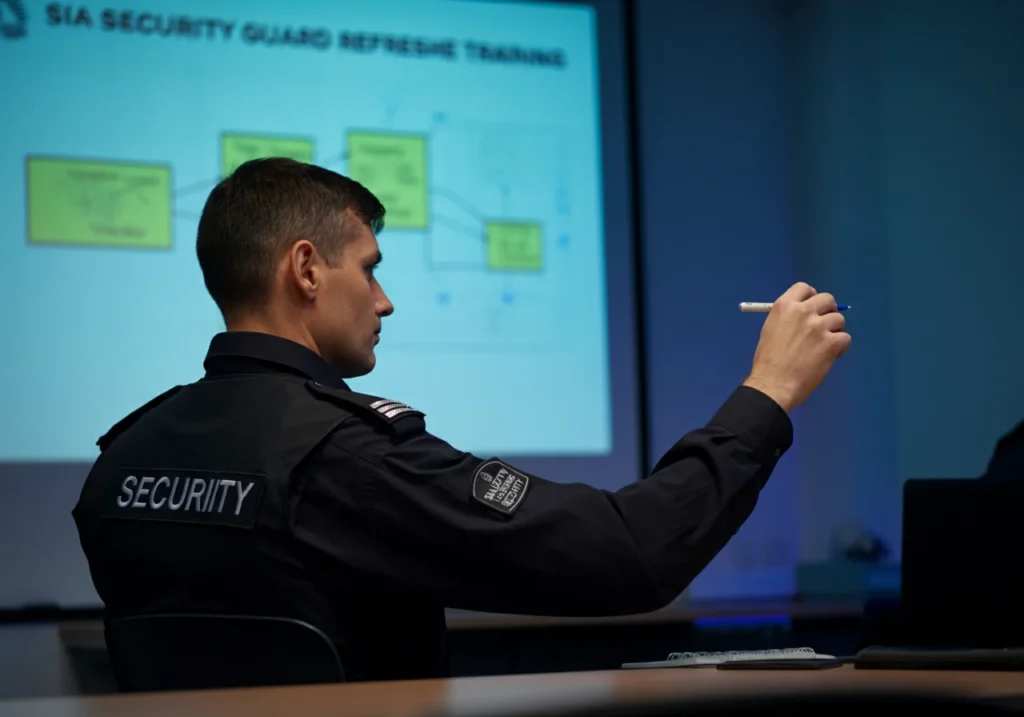
The security industry demands constant vigilance, not just from threats but from evolving regulations and best practices. SIA security guard refresher training serves as your professional lifeline, ensuring you remain compliant, competent, and competitive in this dynamic field. Whether you’re approaching license renewal or simply want to sharpen your skills, understanding the ins and outs of refresher training can make the difference between stagnation and career advancement.
Security professionals face unique challenges that require ongoing education and skill development. From changing legislation to emerging security threats, the landscape shifts constantly. This guide breaks down everything you need to know about SIA refresher training, helping you make informed decisions about your professional development.
What is SIA Refresher Training?
SIA refresher training is a mandatory educational program designed to update and reinforce the knowledge and skills of licensed security professionals. The Security Industry Authority (SIA) requires security guards to complete refresher training before their licenses expire, typically every three years.
The training serves multiple purposes beyond simple compliance. It addresses knowledge gaps that may have developed over time, introduces new industry standards, and ensures security professionals remain current with legal requirements. Unlike initial SIA training, refresher courses focus on updating existing knowledge rather than teaching fundamentals from scratch.
This targeted approach makes refresher training more efficient and relevant to experienced professionals. The curriculum adapts to reflect current industry needs, incorporating lessons learned from recent security incidents and regulatory changes.
Why is Refresher Training Important?
Legal and Compliance Requirements
The most immediate reason for undertaking refresher training is legal compliance. Working as a security guard with an expired license is illegal and can result in severe penalties for both individuals and employers. The SIA enforces these requirements strictly, conducting regular checks and imposing fines for non-compliance.
Security companies face significant risks when employing unlicensed guards. Beyond legal penalties, they may lose their operating licenses and face insurance complications. For individual security professionals, working without proper certification can lead to prosecution and career termination.
Enhancing Skills and Knowledge
The security industry evolves rapidly, with new threats, technologies, and techniques emerging regularly. Refresher training ensures professionals stay current with these developments. Recent changes in terrorism awareness, cybersecurity concerns, and crowd management techniques require updated knowledge that only current training can provide.
Many security professionals discover knowledge gaps during refresher training. Skills that seemed adequate years ago may no longer meet current standards. This training opportunity allows professionals to identify and address these gaps proactively.
Improving Job Performance
Well-trained security guards perform better across all metrics. They respond more effectively to incidents, communicate more professionally with clients and the public, and make better decisions under pressure. These improvements directly translate to better job security and advancement opportunities.
Employers increasingly value guards who maintain current certifications and demonstrate commitment to professional development. Many companies prefer hiring guards with recent refresher training, viewing it as an indicator of professionalism and reliability.
Who Needs Refresher Training?
Security Guards with Expiring Licenses
Any security guard whose SIA license approaches expiration must complete refresher training. The SIA typically requires renewal every three years, though specific timeframes may vary based on license type and circumstances.
Planning ahead is crucial since training slots can fill quickly, especially near common expiration dates. Guards should begin researching training options at least six months before their license expires to ensure adequate time for course completion and license renewal processing.
Guards Needing to Update Their Skills
Even guards with current licenses may benefit from voluntary refresher training. Those returning to work after extended breaks, transitioning between security sectors, or seeking career advancement often find additional training valuable.
Some employers require additional training beyond SIA minimums, particularly for specialized roles or high-security environments. Guards working in hospitals, airports, or corporate headquarters may need supplementary training to meet specific client requirements.
Security Companies Ensuring Compliance
Security companies bear responsibility for ensuring all employees maintain current licenses and training. Many companies implement proactive training programs, scheduling refresher courses well before licenses expire to avoid compliance gaps.
Forward-thinking companies also provide additional training opportunities to enhance service quality and employee retention. Investing in employee development often results in reduced turnover and improved client satisfaction.
Key Topics Covered in SIA Refresher Training
First Aid and Emergency Response
Emergency response training forms a core component of most refresher programs. This includes updated first aid techniques, CPR procedures, and emergency evacuation protocols. Recent events have highlighted the importance of security professionals having current medical response skills.
Training often includes scenario-based exercises that simulate real emergencies. These practical components help security guards apply their knowledge in realistic situations, building confidence and competence.
Conflict Management
Conflict resolution skills require regular updating as social dynamics and legal expectations evolve. Modern refresher training emphasizes de-escalation techniques, cultural sensitivity, and professional communication strategies.
The training addresses current challenges facing security professionals, including dealing with individuals experiencing mental health crises and managing increasingly diverse populations. These skills prove essential in preventing minor incidents from escalating into serious problems.
Legal Updates
Legal frameworks governing security work change regularly. Refresher training ensures professionals understand current legislation regarding powers of arrest, search procedures, and evidence handling. Recent changes in data protection laws also require security professionals to understand their responsibilities regarding surveillance and information handling.
Understanding legal boundaries protects both security professionals and their employers from liability issues. Many legal problems in security work stem from professionals exceeding their authority or misunderstanding their legal obligations.
Technology Updates
Security technology advances rapidly, with new surveillance systems, communication tools, and access control systems entering the market regularly. Refresher training introduces security professionals to these technologies and explains how they impact daily operations.
Modern security work increasingly relies on technology, making technical literacy essential for career advancement. Guards who understand current technology systems position themselves for better opportunities and higher-paying positions.
Benefits of High-Quality Refresher Training
Improved Confidence and Competence
Quality refresher training builds professional confidence by reinforcing existing skills and introducing new techniques. Security guards who feel well-prepared approach their duties more confidently, leading to better performance and job satisfaction.
Competent security professionals also inspire greater confidence from employers and clients. This enhanced reputation often translates to better job assignments and career opportunities.
Better Preparedness for Security Threats
Current training addresses contemporary security threats that may not have been covered in earlier certification programs. These might include cybersecurity awareness, terrorism prevention, or pandemic-related security concerns.
Well-prepared security professionals can identify and respond to threats more effectively, potentially preventing serious incidents. This capability makes them more valuable to employers and enhances public safety.
Enhanced Career Prospects
Security professionals with current training and certifications enjoy better career prospects. Many advancement opportunities require current certifications, and employers increasingly value candidates who demonstrate commitment to ongoing professional development.
The security industry offers numerous specialization opportunities, from corporate security to event management. Current training opens doors to these specialized roles, which often offer better compensation and working conditions.
Choosing the Right Training Provider
Accreditation and Qualifications
Selecting an SIA-approved training provider is essential for meeting legal requirements. Verify that potential providers hold current SIA approval and check their accreditation status before enrolling.
Research the qualifications and experience of training instructors. Experienced professionals who have worked in various security roles can provide valuable insights beyond basic curriculum requirements.
Course Content and Delivery Methods
Compare course content across different providers to ensure comprehensive coverage of required topics. Some providers offer additional modules or specialized training that may benefit your specific career goals.
Consider delivery methods that suit your schedule and learning preferences. Options may include classroom instruction, online learning, or blended approaches that combine both methods.
Reviews and Testimonials
Research provider reputations through online reviews, professional recommendations, and industry feedback. Quality providers should have positive reviews from past students and good relationships with security employers.
Contact previous students directly if possible to get firsthand accounts of training quality and effectiveness. Their insights can help you make informed decisions about training investments.
How to Enroll in Refresher Training
Start by identifying SIA-approved training providers in your area or those offering online options. Compare course schedules, costs, and content to find the best fit for your needs and circumstances.
Most providers require advance registration, particularly during busy periods near common license expiration dates. Book your training well in advance to secure your preferred dates and avoid last-minute rushes.
Prepare for training by reviewing your current knowledge and identifying areas where you need additional focus. Gather required documentation, including your current SIA license and identification documents.
Budget for training costs, which may include course fees, examination costs, and license renewal fees. Some employers reimburse training expenses, so check with your company about available support.
The Future of Security Training
The security industry continues evolving, with new technologies and threats requiring ongoing adaptation. Future training programs will likely incorporate virtual reality simulations, artificial intelligence applications, and advanced threat recognition techniques.
Continuous learning becomes increasingly important as the pace of change accelerates. Security professionals who embrace ongoing education and skill development will be best positioned for future success.
Investing in Your Security Career Success
SIA security guard refresher training represents more than a compliance requirement—it’s an investment in your professional future. Regular training updates keep you current with industry developments, enhance your skills, and improve your career prospects.
The security industry rewards professionals who demonstrate commitment to excellence through ongoing education. By prioritizing refresher training and maintaining current certifications, you position yourself for long-term success in this dynamic field. Take action today by researching approved training providers and scheduling your next refresher course. Your career—and the people you protect—will benefit from your commitment to professional excellence.
