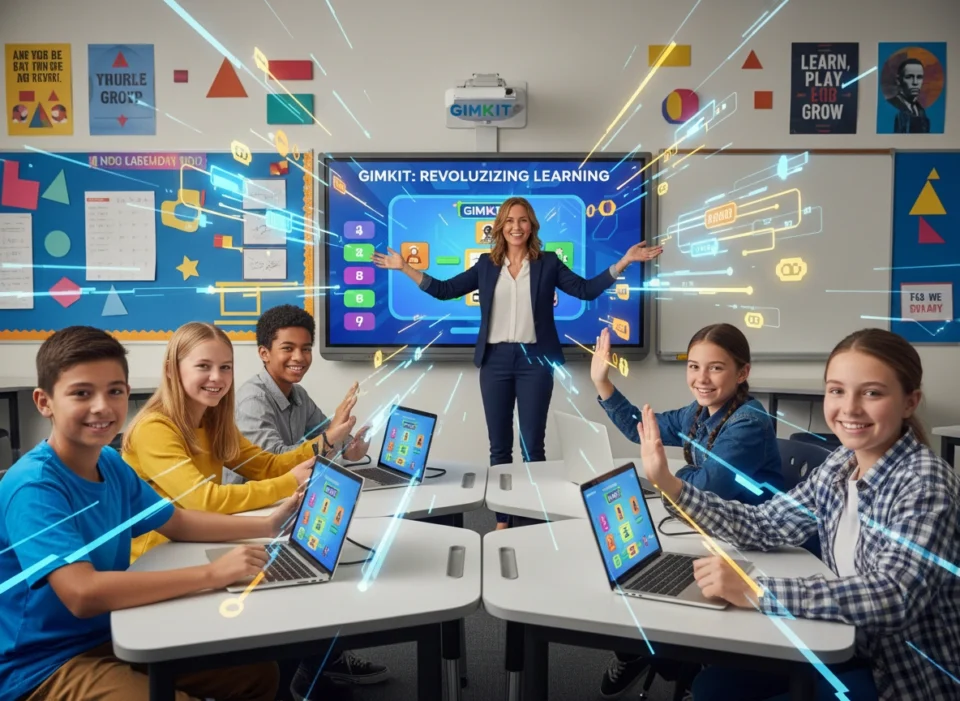
Student engagement has long been the holy grail of education. Teachers constantly seek tools that transform passive listening into active participation. While many platforms have attempted to “gamify” learning, few have struck the delicate balance between genuine fun and rigorous academic practice like Gimkit. Created by a high school student who felt disengaged in his own classes, Gimkit has rapidly evolved from a simple quiz tool into a comprehensive learning ecosystem.
This platform operates differently than its predecessors. It isn’t just about answering questions quickly; it’s about strategy, collaboration, and sustained effort. By blending game show mechanics with proven learning principles, Gimkit has created an environment where students beg to review for tests.
Here are ten compelling reasons why Gimkit is revolutionizing classroom learning and becoming a staple in modern education.
1. High Repetition Without Monotony
One of the core tenets of learning retention is repetition. However, asking a student to answer the same question five times in a row usually results in boredom and disengagement. Gimkit solves this problem through its unique economy-based gameplay.
In a typical Gimkit session, students see questions repeatedly. They need to answer them correctly to earn in-game currency, which they then reinvest in upgrades and power-ups. Because the goal is to accumulate wealth or survive a challenge, students view the questions as a means to an end rather than a chore. They willingly answer the same question multiple times to earn the cash needed for a multiplier upgrade. This “stealth repetition” ensures that by the end of a ten-minute session, a student may have reviewed a core concept twenty times without ever feeling like they were drilling flashcards.
2. Strategic Thinking and Financial Literacy
Most quiz games reward speed and accuracy alone. Gimkit adds a layer of depth by introducing strategy. Students must decide how to spend their earnings. Should they buy insurance to protect against wrong answers? Should they invest in a “streak bonus” to maximize returns on consecutive correct answers? Or should they sabotage the leader to level the playing field?
This mechanic introduces basic financial literacy concepts like investment, risk management, and return on investment (ROI). Students quickly learn that saving money doesn’t always lead to winning; they have to spend money to make money. This strategic element levels the playing field. A student who might process questions slower but has a superior investment strategy can often outperform a student who relies solely on rapid-fire answering.
3. Diverse Game Modes for Every Scenario
One of Gimkit’s strongest assets is its library of game modes. Unlike platforms that offer a single standard format, Gimkit provides a variety of experiences that cater to different classroom energies and learning objectives.
- Classic Mode: Perfect for individual competition and standard review.
- Trust No One: A mode inspired by the popular game Among Us, where students must identify impostors while answering questions. This encourages social deduction alongside academic review.
- The Floor is Lava: A cooperative mode where the class must work together to keep the structure building up to stay above the rising lava.
- Capture the Flag: Teams compete to control territory, fostering collaboration and communication.
This variety keeps the platform fresh. Teachers can rotate modes based on the day’s mood—using cooperative modes for team building or competitive modes for high-energy review—preventing the “tech fatigue” that often sets in with other ed-tech tools.
4. Student-Generated Content with KitCollab
Ownership is a powerful motivator. When students contribute to their own learning materials, engagement skyrockets. Gimkit’s “KitCollab” feature allows students to build the quiz themselves.
Instead of the teacher spending hours inputting questions, they can launch a KitCollab session. Students submit questions from their devices, which the teacher approves or rejects in real-time. Within minutes, the class has built a comprehensive review set. This process serves a dual purpose: writing a good question requires a deeper understanding of the material than simply answering one, and students feel a sense of pride when their question appears on the big screen during the game. It transforms consumers of information into creators.
5. Homework Assignments Students Actually Do
Assigning homework is often a struggle. Completion rates can be low, and accountability is difficult to enforce without tedious grading. Gimkit allows teachers to assign “Kits” as homework with specific deadlines.
The brilliance lies in the completion criteria. Teachers can set a goal based on monetary value (e.g., “Earn $1,000,000”) rather than just a percentage score. This means that if a student struggles, they can keep playing and answering questions until they reach the goal. It rewards effort and persistence rather than just immediate mastery. The asynchronous nature means students can practice at their own pace, free from the pressure of a live classroom timer, making it an excellent tool for independent study.
6. Comprehensive Data and Formative Assessment
While the students focus on the game, Gimkit works in the background as a powerful data collection tool. Once a session ends, teachers receive a detailed report breaking down student performance.
The reports go beyond simple scores. They highlight which questions were missed most frequently, allowing teachers to identify class-wide misconceptions immediately. If 80% of the class missed question #5, the teacher knows to pause and reteach that specific concept right then and there. Individual student reports help identify who is struggling silently. This real-time feedback loop transforms Gimkit from a fun diversion into a legitimate formative assessment tool that drives instructional decisions.
7. Accessibility and Inclusivity Features
Modern classrooms are diverse, and educational technology must be accessible to all learners. Gimkit includes features that support varying needs, ensuring no student is left behind due to a language barrier or reading difficulty.
The platform integrates with Microsoft’s Immersive Reader, a tool that can read text aloud, break words into syllables, and even translate questions into dozens of different languages. This is a game-changer for English Language Learners (ELLs) and students with dyslexia or other reading challenges. They can participate fully in the game alongside their peers, accessing the content in a way that works for them. Furthermore, because questions appear on the student’s own device (rather than just a main projector), students with vision impairments can interact with the content more easily.
8. Fostering Collaboration and Teamwork
In a traditional classroom setting, review is often a solitary activity. Gimkit flips the script with its team-based modes. In modes like “Team Mode” or “Snowbrawl,” success depends on communication and coordinated effort.
Students must talk to each other to strategize. “You buy the multiplier, and I’ll buy the insurance,” or “Let’s all focus on attacking the blue team.” This encourages soft skills like leadership, negotiation, and teamwork. The shared goal creates a positive classroom culture where students cheer for each other. Even in competitive modes, the atmosphere remains spirited and social rather than isolating. The focus shifts from “I need to get an A” to “We need to win this together.”
9. Low Barrier to Entry and Ease of Use
Teachers are already overburdened. They do not have time to learn complex software or spend hours setting up a single activity. Gimkit respects the teacher’s time constraints with an incredibly intuitive interface.
Creating a “Kit” (a question set) is fast. Teachers can import questions from spreadsheets, Quizlet sets, or existing Gimkit libraries within seconds. The “KitBank” allows teachers to search for millions of pre-made kits created by other educators, covering almost any topic imaginable. Launching a game takes two clicks. Students join via a simple code without needing to create accounts (unless they want to track progress). This ease of use ensures that technology facilitates the lesson rather than obstructing it.
10. Continuous Innovation and responsiveness
Perhaps the most reassuring reason to adopt Gimkit is the company’s responsiveness to its user base. Because it was founded by a student and maintains a small, dedicated team, updates are frequent and directly address community feedback.
The platform is not static. New game modes, cosmetic items, and features are released regularly, often seasonally. This keeps the experience exciting for students who might otherwise grow bored of playing the same game all year. The developers actively listen to teachers on social media and support channels, implementing requested features like improved reporting or specific moderation tools. This dynamic approach ensures that Gimkit evolves alongside the changing needs of the modern classroom, remaining a cutting-edge tool rather than a legacy artifact.
Conclusion
Education is shifting away from the “drill and kill” methodologies of the past toward models that value engagement, collaboration, and critical thinking. Gimkit sits comfortably at the intersection of these values. It is not merely a distraction or a way to fill the last ten minutes of class; it is a robust pedagogical tool that respects the intelligence of students and the time of teachers.
By leveraging the psychology of games, Gimkit turns the hard work of learning into a desirable activity. It encourages students to fail safely, try again, strategize, and collaborate. For educators looking to inject energy into their curriculum while maintaining high standards for data and assessment, Gimkit offers a solution that is as effective as it is enjoyable. In the battle for student attention, Gimkit is a powerful ally that is truly revolutionizing the way we think about classroom review.
Please visit website for more info.
