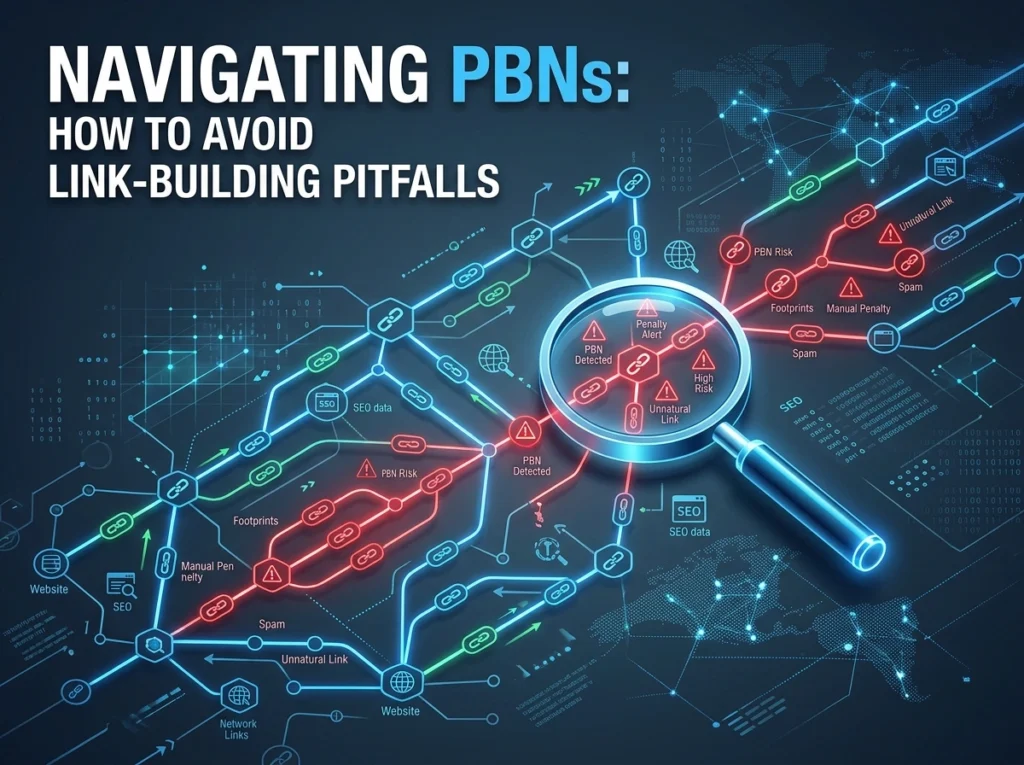
Building a robust backlink profile remains one of the most effective ways to secure top positions on search engine results pages. Site owners and marketing agencies constantly seek new methods to acquire high-authority links that move the needle. Among the various strategies available, leveraging a Private Blog Network (PBN) stands out as a particularly powerful tactic. These networks consist of authoritative websites used primarily to funnel link equity to a central target website.
Getting links from established, high-metric domains can provide a massive boost to your search visibility. Site owners often turn to this method because traditional outreach campaigns are highly unpredictable. You cannot dictate the anchor text, the surrounding content, or the exact placement of your link when relying on organic outreach. PBNs offer a level of control that standard link-building simply cannot match. You decide exactly how and where the link appears, allowing for precise optimization.
However, this high degree of control comes with significant responsibility. Search engines continuously update their algorithms to identify and penalize manipulative link-building schemes. Navigating this landscape requires a deep understanding of network mechanics, quality control, and strategic implementation. If you make the decision to Buy pbn backlinks, you must know how to separate premium networks from toxic ones. This guide will walk you through the essential steps to avoid common mistakes and protect your website while maximizing your ranking potential.
Understanding the Risks and Rewards
Before spending your marketing budget on any link-building strategy, you need a clear picture of the potential upside and the associated dangers. PBNs are polarizing in the SEO community precisely because they offer extreme versions of both.
The primary reward is speed. Traditional white-hat link building takes months of relationship building, content creation, and email outreach to show measurable results. PBN links, originating from domains with pre-existing authority, pass link juice immediately upon indexing. You can often see noticeable ranking improvements within weeks. Furthermore, this method allows for targeted traffic generation. Because you control the anchor text, you can optimize for the exact commercial keywords that drive revenue for your business.
The primary risk is algorithmic penalization. Search engines like Google explicitly state that buying links to manipulate search rankings violates their guidelines. If an algorithm detects that a group of sites exists solely to sell links, it can devalue the entire network. In severe cases, the target site receiving the links might face a manual penalty, leading to a complete drop from the search index. The line between a successful campaign and a disastrous penalty usually comes down to how well the network hides its footprint.
Common Pitfalls to Avoid
When site owners run into trouble with network links, it is rarely due to bad luck. Penalties almost always stem from poor vendor selection and easily identifiable footprints. Here are the most critical mistakes you must avoid.
Relying on Poor-Quality Websites
The most common mistake is purchasing links from a network built on low-quality domains. Some providers try to maximize their profit margins by acquiring cheap expired domains with terrible backlink profiles. They might buy sites loaded with spam, foreign language links, or toxic anchors.
When you get a link from one of these domains, you are funneling that toxicity directly to your own site. Always demand transparency regarding the metrics of the sites linking to you. A reputable provider will use domains with clean histories, high Domain Authority, and real referring domains. If a provider offers hundreds of links for a few dollars, you can be certain those sites are essentially digital garbage.
Ignoring Footprint Issues
A footprint is any shared characteristic that reveals multiple websites are owned by the same person or entity. Search engines employ highly advanced algorithms designed to detect these similarities. If a network leaves a massive footprint, it is only a matter of time before it gets penalized.
Common footprint issues include shared IP addresses, identical nameservers, and matching WHOIS registration data. Less obvious footprints include using the exact same WordPress theme across fifty sites, using the same Google Analytics tracking code, or publishing articles on the exact same day every week. Premium networks go to extreme lengths to ensure every site looks completely independent. They use diverse hosting providers, unique IP subnets, and varied content management systems.
A Lack of Topical Relevance
Search engine algorithms have evolved far beyond simply counting the number of links pointing to a page. They now place massive emphasis on topical relevance. If you run a website selling dental equipment, a backlink from a blog about dog training will look highly suspicious.
Many cheap networks are “general” blogs. They publish articles about finance, health, sports, and home improvement all on the same domain. A link from a disorganized, multi-topic blog carries very little weight and sends a confusing signal to search engines. You must seek out niche-relevant networks. Your links should come from domains categorized by your specific industry, ensuring the links originate from topically adjacent neighborhoods.
Over-Optimizing Anchor Text
Because you control the exact phrasing of the hyperlink, the temptation is to use your primary commercial keyword every single time. This is a massive red flag. Natural backlink profiles feature a wide variety of anchor texts.
If eighty percent of your incoming links use the exact match phrase “best personal injury lawyer,” search engines will immediately recognize the manipulation. A safe strategy involves heavily utilizing branded anchors, naked URLs, and generic phrases. Exact match commercial keywords should make up a very small percentage of your overall anchor text profile.
How to Vet a PBN Provider
Finding a reliable vendor is the most crucial step in this process. You must look past the sales copy and ask probing questions to determine the actual quality of the network.
Check for Network Diversity
Ask the provider how they structure their hosting and domain registrations. They should be able to explain their process for keeping sites separate. If they host all their sites on a single server block or use the same registrar for everything, walk away. A trusted provider will happily discuss their footprint management strategy, even if they keep the specific URLs hidden for security reasons.
Ask About Content Quality
Search engines crawl the text surrounding your link to understand the context. If the article is generated by cheap spinning software or written poorly, the link will carry almost no value. Search algorithms are increasingly adept at identifying unhelpful, low-effort content.
Inquire about the writing process. Does the provider use native English writers? Do they ensure the articles are topically relevant to your niche? Premium providers treat every site in their network like a real business, utilizing high-quality, readable content that actually provides value to a human reader.
Review Their Link Placement Guidelines
A network that links out to hundreds of different websites from a single homepage is a massive spam indicator. You want to avoid “link farms” at all costs. Ask the provider about their outbound link limits.
High-quality networks strictly limit the number of outgoing links per post and per domain. This preserves the link equity and ensures the site maintains its authority over time. Furthermore, check if they place links on the homepage or inner pages. Contextual links embedded naturally within inner page articles are generally much safer than sticky homepage links.
Best Practices for Safely Implementing PBN Links
Once you have found a reliable provider, you must implement the links strategically. Simply throwing dozens of high-power links at a brand-new website is a recipe for disaster.
Blend with White-Hat Link Building
PBN links should never be the only tool in your SEO arsenal. They work best when used as a supplemental strategy alongside traditional white-hat link building.
Focus on acquiring natural links through digital PR, guest posting, and creating highly shareable content. Use standard outreach to build a foundation of foundational links, directory citations, and social profiles. Once your site has a natural-looking base, you can use powerful network links to push your most competitive keywords over the finish line. This blended approach masks the engineered links within a sea of organic activity.
Control Your Link Velocity
Link velocity refers to the speed at which your website acquires new backlinks. If your site has existed for two years and only gained five links, suddenly acquiring fifty high-authority links in three days will trigger algorithmic alarms.
You must build links at a natural, steady pace. Start slowly. Add one or two powerful links to your site, then wait a few weeks to monitor the results. Gradually increase the velocity as your organic traffic grows. A reputable provider will help you drip-feed the link placements over several weeks to simulate natural popularity growth.
Monitor Your Backlink Profile
SEO requires constant vigilance. Even with the best providers, things can change. A domain in the network might accidentally drop, or a hosting issue could expose a footprint.
Regularly audit your backlink profile using professional SEO software. Keep track of every link you purchase. Monitor the Domain Authority and spam scores of the linking sites over time. If you notice any suspicious activity or if a site’s metrics suddenly plummet, you should contact your provider immediately to have the link removed or replaced.
Frequently Asked Questions About Network Links
How many links do I actually need to rank?
The number of links required depends entirely on your current link profile and the competitiveness of your target keywords. A local business operating in a small city might only need three to five high-quality links to dominate the local search results. A national eCommerce brand competing for highly searched terms might need dozens of links over a sustained period. You should conduct a comprehensive audit of your competitors to determine the exact link gap.
How long does it take to see positive movement?
Because premium networks utilize domains that are already trusted and frequently crawled, new links are usually indexed rapidly. You will typically begin to see positive movement in your keyword rankings within two to four weeks of the links going live. The full impact of the link equity is usually realized around the sixty-day mark.
Are these networks dead?
SEO professionals have claimed this strategy is dead every year for the past decade. The truth is that poorly built, cheap, footprint-heavy networks are indeed dead and highly dangerous. However, meticulously maintained, premium networks that prioritize content quality and strict footprint management remain one of the strongest ranking signals available today. The strategy has simply evolved; it requires a much higher budget and strict attention to detail than it did years ago.
Take Control of Your Link-Building Strategy
Securing a top position in search results requires a calculated, highly effective approach. While organic outreach is necessary, relying on it entirely often leaves you lagging behind competitors who utilize advanced tactics. Integrating authoritative, highly controlled links into your strategy provides the targeted power needed to push your core pages to the top of the SERPs.
By understanding the mechanics of link equity, meticulously vetting your providers, and maintaining strict footprint management, you can mitigate the associated risks. Remember to prioritize topical relevance, diversify your anchor text, and keep a steady, natural link velocity. When executed properly, this strategy accelerates your growth, drives highly targeted organic traffic, and provides a measurable return on your marketing investment. Treat your link-building process with precision and care, and watch your search visibility soar.
